Thermal Insulating Strut
The main function of a thermal break system is to separate an aluminum profile into two parts to reduce thermal conductivity in a window. The two ways of doing this are by using polyamide insulating strips or poured polyurethane.
Aluminum is a highly thermal conductive material that will rapidly transfer exterior climatic temperature unless something is done to stop the thermal conduction. A thermal barrier system will improve thermal performance while maintaining the structural and long-term durability of the fenestration unit. According to the thermal strut manufacturer, Technoform, aluminum is 533 times more conductive than polyamide insulating strips.
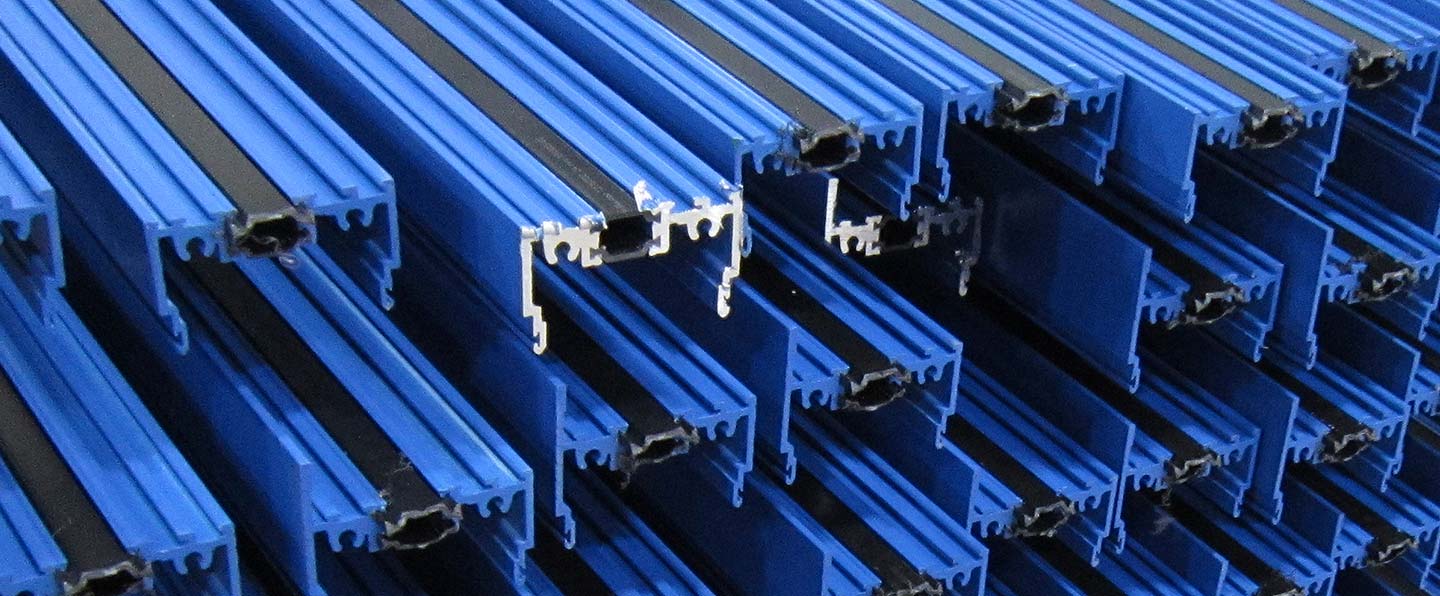
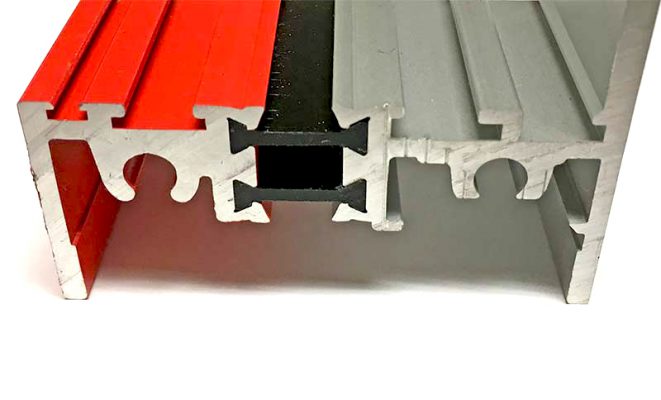
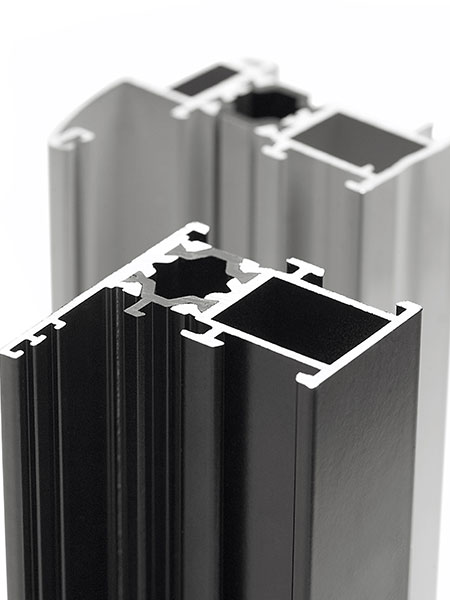
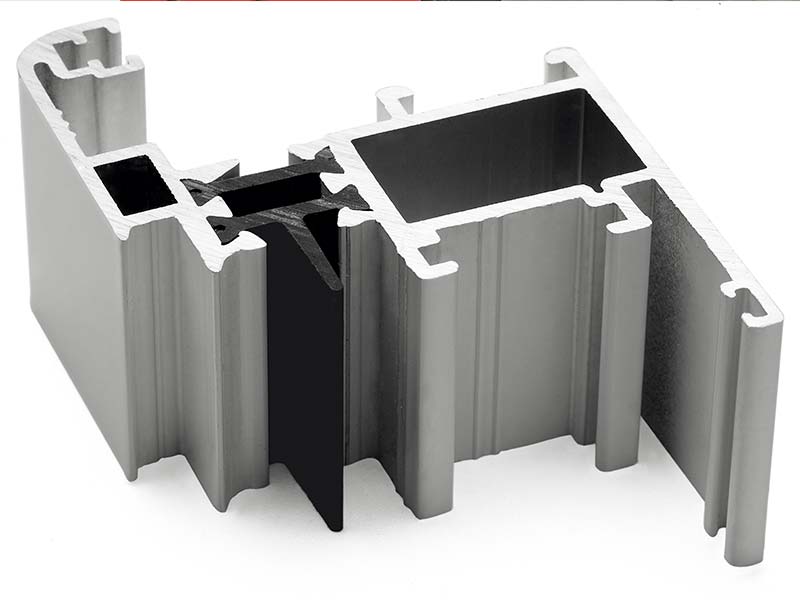
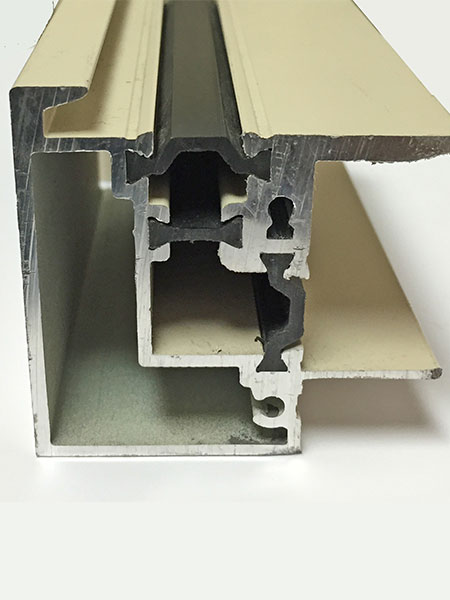
Thermal Strut involves two separate extrusions and joins them through the use of engineered structural plastic strut. Both the inside and outside aluminum profiles are extruded independently with a cavity that will ultimately receive the strut.
With Technoform thermal strut, products can be manufactured with two-tone finishes; because interior and exterior components can be coated before assembly. Architects and designers can choose to apply the interior and exterior finishes that best match their cost, performance and design requirements.
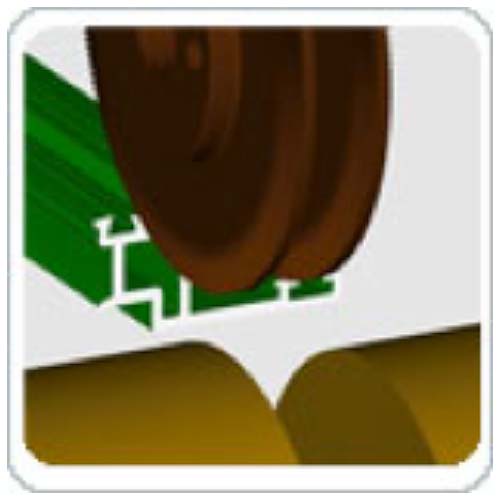
Knurling. Knurling is the first step in the production process.
It is performed to produce teeth in the aluminum pocket that will “bite” into the Strut during the crimping process. Proper knurling is required to insure adequate shear strength of the composite profile.Quality check for knurling: Proper knurling generates teeth that are between 0.15 mm and 0.30 mm long. The distance between teeth center-lines should be no greater that 0.78 mm. To generate adequate size and spacing of the teeth, the Linetec operator must (a) properly align the knurling wheels in the aluminum recess, (b) provide adequate pressure upon the knurling wheels during the process, and (c) use a knurling wheel capable of providing teeth of ample size and spacing.
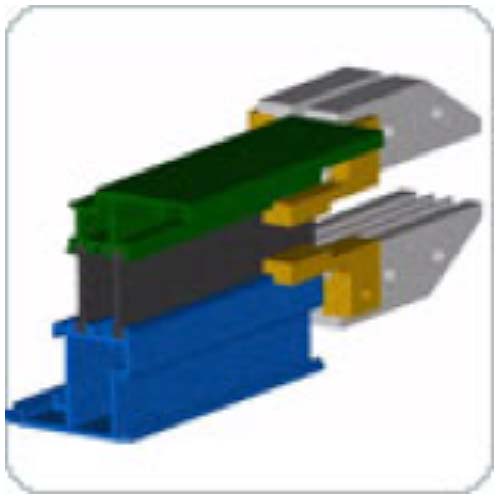
Insertion. Prior to struts being inserted they are properly selected and verified against the production paperwork. Care must also be taken to assure the struts are oriented per the order requirements - not all struts are symmetric.
The strut is aligned with the cavity, and held by small automatic clamps on the back side of the first knurler. As material is run through the first knurler, the strut slides into the extrusion cavity. This extrusion with the strut in it, then gets transferred to the second knurler, and slid into place by an automated push plate. Little finger like slides guide the strut to the proper alignment with the other extrusion half of the assembly. Once the strut is in place, sensor is reached, the second knurler will turn on and slide the second extrusion over the first. The assembly is connected by two knurled extrusions held together with thermal strut. This loose assembly gets transferred to the crimp or rolling machine.
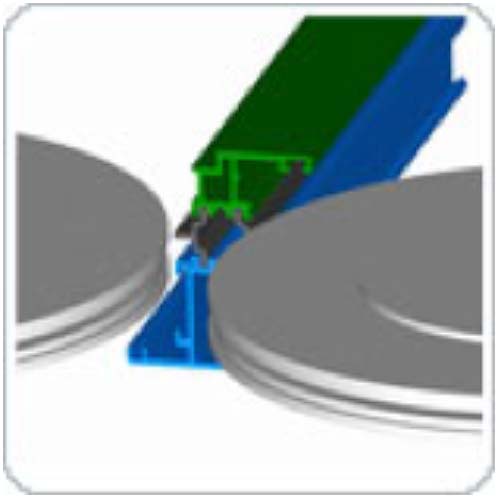
Crimping. The crimping process uses three sets of wheels which rotate the aluminum on to the strut to mechanically lock it into place, forming the bond between the two extrusions and the strut.
The assembled aluminum and Strut profiles then act as a composite to transfer loads. Over 1300 pounds of pressure is applied in stages to crimp the aluminum. The first set of wheels applies 50 percent of the pressure while the second set applies 100 percent. The third set of wheels help to straighten the extrusion and completes the crimping process.The crimping machine is set-up and adjusted for each new individual assembly. Adequate support must be provided to the assembly during the crimping process and sufficient pressure must be supplied to close the aluminum pocket tightly against the strut. Machine setups are determined the first time a particular assembly is run. Provided adequate shear values are attained, the machine settings are then recorded and used as a general guideline each time a particular assembly is required.